There is no licence required to work as an electrician in the United Kingdom. Anyone
can buy a van and print a logo. Registration is the only practical way for a customer
to check that someone's work has been independently examined.
NICEIC is the largest of the UK electrical competent person schemes. Registration is
not a certificate you buy once and frame. It is an annual assessment, and it can be
withdrawn.
Each year an assessor:
visits completed jobs and inspects the workmanship on site
reads the test results and certificates we have issued and checks they are correct and complete
inspects our test instruments and their calibration records
examines our technical reference library and confirms it is current
assesses the technical competence of our nominated qualified supervisor
reviews our health and safety documentation and insurance
If the work does not meet the standard, registration is suspended or removed. That
is the whole point of it. An outside party with no commercial interest in us looks
at what we actually built, not at what we say about ourselves.
What it protects you from
The honest answer is that registration does not guarantee perfection. What it does
is remove the worst outcomes, and give you a route when something is wrong.
Uncertified work. Every job gets the correct certificate. Without
it you have no record that anything was tested, and no evidence for a buyer,
insurer or local authority.
Unnotified work. Notifiable work carried out without notification
is a breach of the Building Regulations, and it becomes your problem, not the
contractor's, when you sell.
A contractor disappearing. Registered work is covered by the
NICEIC complaints and resolution process, which does not depend on the contractor
cooperating.
Nowhere to complain. NICEIC operate a complaints procedure that
does not depend on the contractor cooperating.
Assessed every year
An NICEIC inspector visits completed work, reads the test results and checks the instruments.
Notified for you
Part P notifications lodged with your local building control, not left on your desk.
An independent route
A complaints and warranty route that does not depend on us agreeing to cooperate.
How to check us
Go to niceic.com and open the contractor search.
Search by company name or by postcode SM6 0SX.
Confirm the registration comes back in the name of The Electrician London Ltd and the registered address matches the one in our footer.
Check which categories of work we are assessed for.
Never rely on a logo alone, on a van, a website or a quotation. Images can be
copied by anyone. The register is the only thing that proves it, and searching it
takes about thirty seconds.
Documentation
The certificate you should receive
Different work produces different documents. If you have had electrical work done and
received nothing at all, that is a problem worth chasing.
Certificates issued under BS 7671 and when each one applies.
Document
When it is issued
What it tells you
Electrical Installation Certificate
New installations, and any new circuit. A rewire or consumer unit change always produces one.
The design, construction, inspection and testing of the new work, with full schedules of test results for every circuit.
Minor Electrical Installation Works Certificate
Additions and alterations that do not involve a new circuit: an extra socket, a light moved, an accessory replaced.
What was altered, the tests carried out on the affected circuit, and confirmation that the change has not made anything worse.
Electrical Installation Condition Report
Periodic inspection of an existing installation. Required for rented property at least every five years.
The condition of the whole installation, coded observations, and whether it is satisfactory for continued use.
Building Regulations compliance certificate
Notifiable work in a dwelling in England, issued after we notify your local authority through the scheme.
That the work was notified and complies with Part P. This is the one a buyer's solicitor asks for.
Building Regulations
Part P, and whether it applies to your job
Part P covers electrical safety in dwellings in England. It has applied since 2005,
and the notification requirements were narrowed in 2013. That is why a lot of
out-of-date advice is still circulating.
Notifiable work
These must be notified to building control:
Installing a new circuit
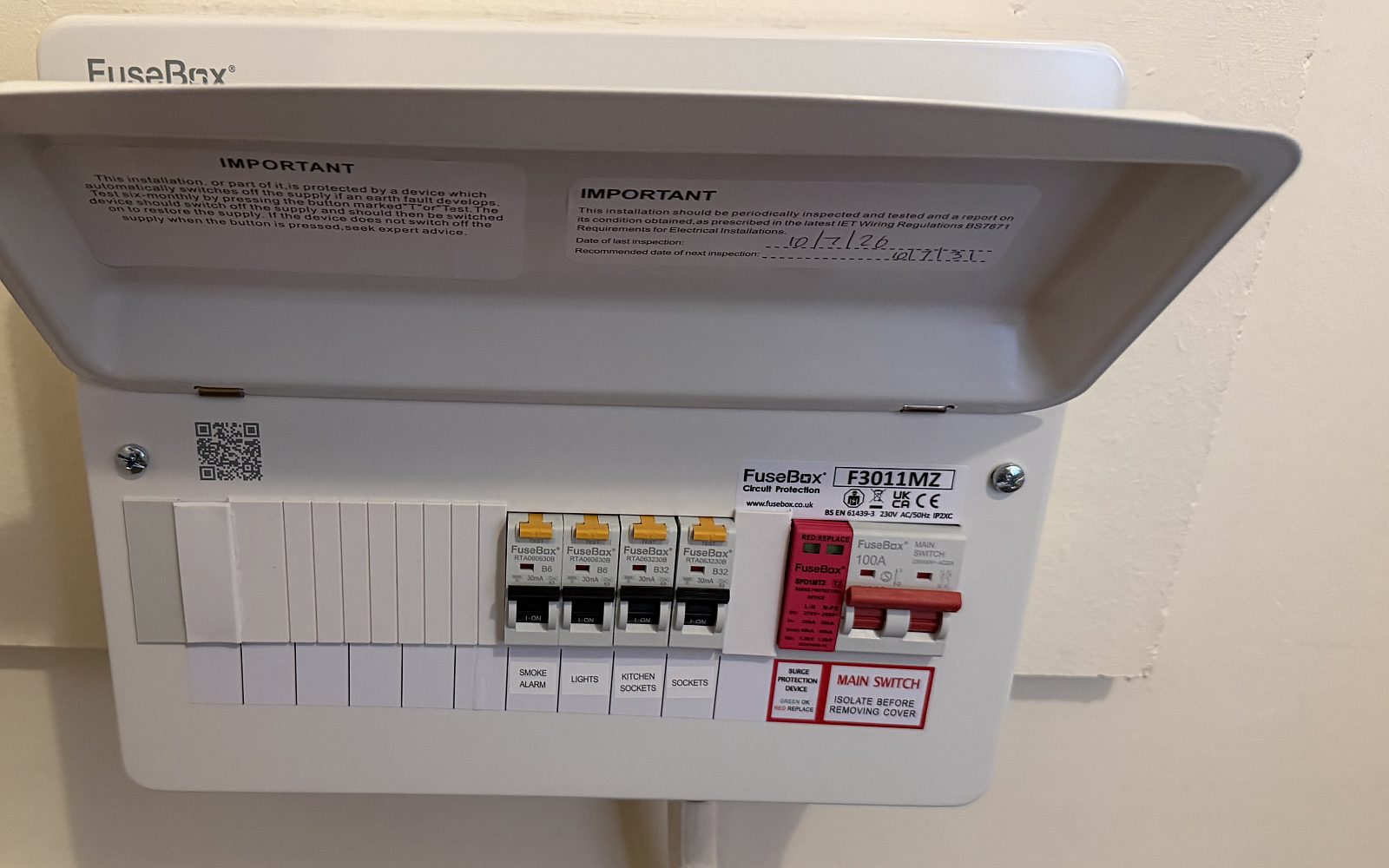
Replacing a consumer unit or fuse box
Any addition or alteration to circuits in a room containing a bath or a shower
We self-certify all of these under our registration and notify your local authority
for you. You receive the compliance certificate, normally within a few weeks, and
the local authority records it against the property.
Not notifiable
These do not need notification, but still need doing correctly:
Adding a socket or a light to an existing circuit outside a bathroom
Replacing an accessory such as a socket, switch or light fitting
Replacing a damaged cable on a like-for-like basis
Not notifiable does not mean uncertified. This work still has to comply with
BS 7671 and should still produce a Minor Works Certificate. Anyone telling you a
job is too small for paperwork is telling you something about themselves.
If work was done without notification
It happens, usually discovered during a sale. The route back is a regularisation
application to your local authority building control, who will want the installation
inspected and tested before they certify it. We carry out that inspection regularly.
It costs more than doing it properly first time, and it is fixable.
Competent person scheme member, able to self-certify notifiable work in dwellings.
Insurance
Public liability insurance is held for all work carried out.
A copy of the certificate is available on request.
Business details
The Electrician London Ltd, a limited company based in Wallington, Surrey.
Common questions
Questions we are asked most often
What does NICEIC registration actually mean?
NICEIC assess registered contractors regularly. An assessor inspects completed work on site, reviews test results and certificates, checks calibration records for test instruments, and confirms technical competence against BS 7671. Registration can be withdrawn if standards are not met, so it is an ongoing check rather than a one-off qualification.
How do I check an electrician is genuinely registered?
Use the free contractor search on niceic.com and search by company name or postcode. Do not rely on a logo on a van or a website, because anyone can copy an image. The register is the only thing that proves it, it costs nothing to search, and it takes about thirty seconds.
What is Part P and does it apply to my job?
Part P of the Building Regulations covers electrical safety in homes in England. Notifiable work includes installing a new circuit, replacing a consumer unit, and any addition or alteration in a room containing a bath or shower. Notifiable work must either be self-certified by a registered installer or notified to building control in advance, and the second route costs considerably more.
What certificate will I receive?
It depends on the work. A new circuit or a consumer unit change produces an Electrical Installation Certificate with full schedules of test results. An addition or alteration to an existing circuit produces a Minor Electrical Installation Works Certificate. A periodic inspection produces an Electrical Installation Condition Report. Notifiable work in a home also produces a Building Regulations compliance certificate.
Related services
Registration applies across everything we do, domestic and commercial alike.
If you have inherited work with no paperwork, been given a report you do not understand, or been told something needs replacing and you are not sure, call and ask. We do not charge for an opinion.
We use essential cookies to make the site work and to keep the enquiry form secure.
With your permission we would also like to use Google Analytics to understand which
pages are useful. Nothing is loaded until you choose.